
The “Slavic Bitch Face” has officially transitioned from a Cold War stereotype to a high-fashion TikTok aesthetic, and the internet doesn’t know whether to curtsy or run for cover.
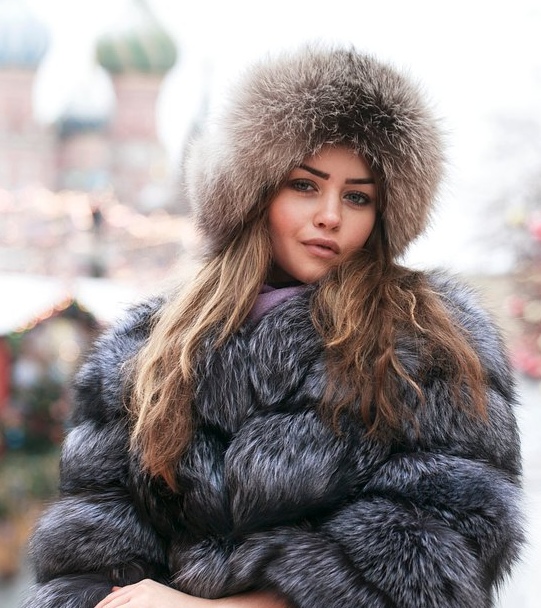
If you’ve spent any time on your FYP lately, you’ve seen them: girls in massive faux-fur shapkas, sporting sharp winged eyeliner and an expression that suggests they’ve just witnessed a minor tragedy and found it “mildly inconvenient.” It’s the #SlavicGirl trend, and it’s currently dismantling the American obsession with the “service with a smile” industrial complex.
The Death of the “Customer Service” Grin
For decades, the West viewed the stoic, unsmiling expressions of Eastern European women as a sign of hostility. But in 2025, that icy stare has been rebranded as “expensive.”
While Americans are conditioned to treat a smile as a social lubricant—a mandatory “I’m not a threat” signal—the Slavic approach is rooted in a different philosophy: if there’s no reason to laugh, why are you showing me your teeth? This isn’t just a vibe; it’s a cultural divide backed by data. Studies show that in post-Soviet cultures, a random smile from a stranger isn’t seen as friendly—it’s seen as suspicious, unintelligent, or a sign that you’re trying to sell something.

Slavic girl look without smile, explained / Facebook.com
From “Sullen” to “Doll”
The pivot happened when TikTok creators began romanticizing the “Slavic Doll” look. We’re talking:
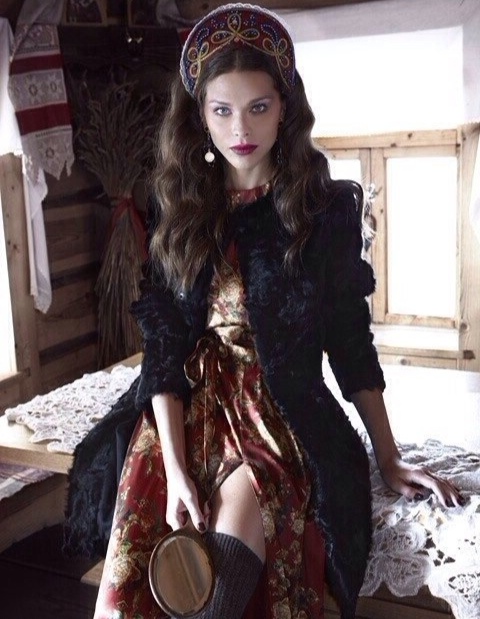
The Uniform: Vintage fur coats, silk headscarves, and heeled boots.
The Diet: The viral #SlavicDiet, which hilariously (and inaccurately) claims Eastern European women stay thin by eating nothing but buckwheat and avocados.
The Energy: Total emotional unavailability.
It’s a complete rejection of the “nice girl” trope. For many Western women, adopting the “bitch face” is a form of armor. It’s the ultimate “do not disturb” sign for the subway or the bar.
The “Male Gaze” Paradox
Ironically, the very thing that was supposed to make these women “unapproachable” has become a massive fetish for Western men. On forums like Reddit, the Slavic “coldness” is being reinterpreted not as rudeness, but as high-value selectivity.
The consensus among the digital dating crowd? A smile from a woman who rarely gives one is worth more than a thousand “polite” grins from a girl in San Francisco. It’s the allure of the “Ice Queen,” and right now, the internet is freezing over.
The Receipts: Who Said What
On the Cultural Meaning of a Smile
“This is a nation with a bitchy face syndrome… Russians don’t have the skill to smile for no reason and don’t consider it necessary to develop it.”
— Olga Khazan, Journalist (The Atlantic)
On the “Resting Bitch Face” Gender Gap
“Bitch face occurs equally often in both sexes, but we tend to notice it more in women, who are initially pressured to be happy, helpful, and smiling.”
— Abbe Macbeth, Behavioral Scientist (Noldus Information Technology)
On the “Bitch Face” as Safety Armor
“A frowning, dissatisfied face is useful armor. Sometimes it is the only barrier between a woman and unwanted attempts by strangers to strike up a conversation.”
— Yomi Adeogbe, Journalist (The Guardian)
On the Performance of Happiness
“Spend time with young women and you’ll hear a lot of phrases like ‘Oh, that’s great!’, ‘I love it!’. In reality, they don’t feel strong emotions at that moment.”
— Marianne Lafrance, Psychologist (Yale University)
On the New Slavic Aesthetic
“The West picked up on this trend because it offered something exotic, fetishistic, traditional, yet beautiful.”
— Agniet Gelazunaite, Digital Culture Researcher
On Why It Works for Men
“They do not engage in the superficial politeness… This makes you think that a smile is really something meaningful, not just a formality.”
— Reddit User, discussing dating in Eastern Europe
Sources and Further Reading
The Science of Why Some Cultures Don’t Smile – The Atlantic
Five Things Westerners Misunderstand About Eastern Europeans – Medium
What a Russian Smile Actually Means – Nautilus
The “Resting Bitch Face” Neural Network Study – The Washington Post
Why Women Are Striking From Smiling – The Washington Post
The Rise of the “Slavic Doll” on TikTok – Leiden University Digital Media


real slavic face